Brampton food safety and commercial cleaning experts help you keep restaurants, commissaries, baking facilities, warehouses, and mobile food operations sanitized to standards. They disinfect high-touch points, food-contact surfaces, equipment, floors, drains, restrooms, and prep zones using approved chemicals, correct dilution, and documented contact times. in maintaining dining venues, food supply centers, bakeries, warehouses, and mobile food operations in compliance. They disinfect high-touch points, food preparation zones, equipment, floors, drains, restrooms, and prep areas using certified sanitizers, correct concentration, and documented exposure durations.
Essential Summary
- Brampton's sanitation specialists maintain restaurants, grocery departments, commissaries, warehouses, bakeries, schools, mobile vendors, and allergen-sensitive operations.
- They sanitize frequently contacted areas, food-contact equipment, kitchens, floors, drains, restrooms, and storage areas using area-specific procedures to eliminate cross-contamination.
- Certified providers confirm proper chemical concentration, alignment, and contact time, then record finalization with samples, reviews, and correction logs.
- Threat, production rate, switches, incidents, and regulations should guide cleaning calendars, with regular, weekly, and periodic duties assigned by location.
- Liability, color-categorized tools, HACCP, health regulatory expertise, safety training instruction, testimonials, and inspection-ready cleaning documentation are essential provider attributes.
Food Safety Cleaning Requirements for Brampton Facilities
Any Brampton facility that handles, stores, prepares, packages, or serves food needs food safety cleaning. You must apply it if your operation falls under public health review, food rules, or HACCP systems. That requirement covers restaurants, cafeterias, commissaries, grocery food departments, butcher shops, seafood counters, convenience stores, and institutional kitchens.
Proper sanitation protocols is furthermore required in warehouses, food manufacturing plants, cold storage sites, retail bakeries, school nutrition programs, banquet halls, and meal delivery hubs. Temporary and mobile businesses count as well, including catering vehicles, festival sellers, and pop-up stands. Your venue demands written cleaning standards when your employees prepare supplies, portion completed foods, reheat products, or manage allergen records. In Brampton, hygiene continues to be not discretionary; it represents lawful, operational, and customer protection adherence.
Which Areas Do Brampton Cleaning Experts Cover?
You require experienced cleaning professionals who disinfect high-touch surfaces, cooking areas, floor areas, and bathrooms to maintain food safety and public health requirements. These areas are targeted due to their high cross-contamination potential, slip and fall dangers, and health code violations.
By understanding their service scope, you are able to confirm your facility's cleaning procedures satisfy all operational and regulatory requirements.
High-Touch Surface Cleaning
arrange sanitization intervals determined by traffic, contamination risk, and operational use.
swab testing to verify sanitization efficacy
Cooking Zones, Walking Surfaces, and Restroom Environments
Expect Brampton cleaning experts to target kitchens, floors, and restrooms because each area carries distinct foodborne illness prevention, slip-and-fall, and sanitation risks. In industrial kitchens, you need degreasing on cook lines, equipment exteriors, drains, prep surfaces, and splash zones to minimize bacterial growth and pest activity.
Floor care that is documented should also be anticipated. Technicians scrub and extract buildup from tile grout, ceramic surfaces, and vinyl floors, then apply appropriate drying controls so you can reduce slip incidents and meet regulatory standards. They also handle entry points where dampness and dirt enter the building.
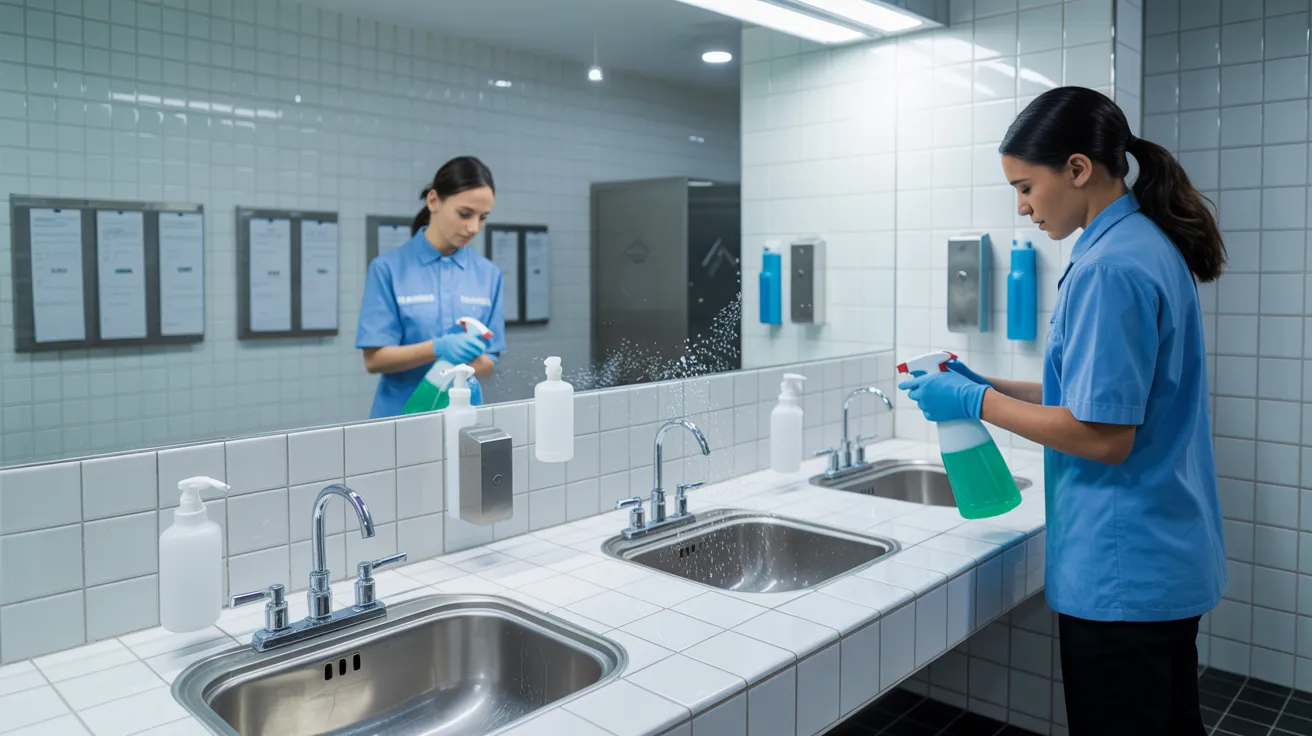
Restroom sanitation requires decontaminating touch areas, bathroom equipment, stall barriers, supply stations, and bins, replacing items and managing smells. They also service restaurant moprooms, where chemical storage, sink hygiene, and drainage conditions can affect sanitation compliance and staff safety daily.
How Food Safety Cleaning Benefits Brampton Operations
Brampton facilities require food-safe cleaning standards to fulfill health code requirements and pass inspections. You also minimize cross-contamination by cleaning and sanitizing food-contact surfaces, equipment, and high-touch areas correctly. Most importantly, you safeguard public health by lowering the risk of foodborne illness in your facility.
Regulatory Code Requirements
Brampton food companies must comply with stringent health requirements, so cleaning procedures is vital to meeting health codes, ensuring the safety of customers, and sidestepping penalties. You must maintain hygienic food handling zones, documented cleaning schedules, proper chemical use, and traceable training practices that align with municipal and provincial inspection expectations.
Comprehensive sanitation documentation assist you in demonstrating due diligence during compliance reviews and establishing your methods follow reliable patterns that are reproducible and overseen.
Contamination Management
Maintaining regulatory compliance copyrights on your capacity to prevent cross-contamination during everyday food preparation and sanitation. You need to partition uncooked items from finished dishes, sterilize work zones between assignments, and store chemicals away from food-contact items. Clear procedures reduce transfer risks and reinforce steady regulatory adherence.
Implementing allergen separation helps ensure major allergens don't touch communal work zones, bins, or devices. Deploy dedicated cutting boards, color-coded tools, and clear tool marking so staff don't mix items while preparing or distributing. Require handwashing after handling fresh proteins, aquatic items, egg products, or allergen materials. Refresh cleaning cloths often, and verify sanitizer strength with test strips. When you train staff to follow these controls per shift, you create a cleaner, safer operation that satisfies Brampton's food safety needs regularly.
Community Health Protection
When food safety cleaning weaken, you don't only risk a failed inspection—you raise the likelihood of food contamination striking customers, staff, and the larger Brampton community. You also undermine your responsibility in protecting public health, especially in busy food facilities where pathogens travel quickly through surfaces, equipment, and touchpoints.
You need cleaning protocols that remove soils, disinfect properly, and confirm effectiveness. That requires adhering to exposure periods, employing authorized sanitizers, documenting schedules, and training staff to meet regulatory standards. These measures facilitate disease prevention by reducing pathogens before they reach food or hands. In Brampton, rigorous cleaning shields at-risk groups, prevents disease spread, and enables you to show proper care. When you maintain proper standards, you exceed basic requirements—you substantially decrease danger and support safer food service citywide.
Why Is Cleaning Essential for Food Safety Compliance?
Implementing thorough cleaning protocols bolsters food safety compliance by minimizing contamination hazards, limiting pathogen development, and positioning your facility in accordance with sanitation requirements under HACCP-based programs and public health regulations. You ensure that product-contact areas stay visibly clean and microbiologically controlled, facilitating documented preventive controls and inspection readiness.
Cleaning programs additionally upgrade allergen control by extracting residues that can trigger undeclared allergen exposure.
When Should You Schedule Commercial Cleaning?
regular regular cleaning
You should also plan periodic tasks on their own
How Do You Choose Brampton Cleaning Experts?
Screen providers initially by their food hygiene standards—not budget alone. You need to confirm that every company meets CFIA, public health, and HACCP standards for your operation. Demand proof of insurance, WHMIS compliance, training records, and management systems. Evaluate technician knowledge of cross-contamination risks, chemical safety, and documented sanitation practices.
Additionally, you need to evaluate operational reliability and responsibility. Obtain references from Brampton food operations, then review service speed, corrective-action procedures, and communication practices. Verify the company supports supplier audits and can deliver inspection-ready documentation when inspectors or external parties need proof. Verify equipment upkeep, color-coded equipment are applied correctly, and location-specific dangers are identified. A qualified provider protects compliance, product quality, and your brand reputation.
What aspects should a sanitation plan include?
Create a documented strategy that defines every sanitation task, standard, learn the details and responsibility prior to beginning production. You should document cleaning schedules, authorized products, mixing ratios, exposure periods, equipment, and testing procedures for each zone, surface, and piece of equipment. Be sure to include pre-operational inspections, corrective actions, and employee training requirements.
Your plan should also tackle prevention of contamination, waste management, pest-control tactics, and scheduled records for facilities, drains, flooring, and food-preparation surfaces. Specify how you'll distinguish between uncooked and prepared items, facilitate ingredient tracking, and maintain accurate allergen labeling through validated cleaning between product changes. You should establish accountability, document signed records, and evaluate results against regulatory standards, HACCP controls, and customer requirements. When gaps appear, modify procedures immediately and retrain staff.
Popular Asked Questions
Can sanitation providers accommodate overnight shifts in Brampton facilities?
Yes, you can arrange sanitation coverage to accommodate overnight shifts in Brampton facilities. You'll coordinate overnight sanitation around operational schedules, security measures, and staffing requirements. Providers typically map nightshift logistics to reduce disruption, ensure adherence, and document completed tasks. You should verify arrival timeframes, oversight, access protocols, and waste handling before service begins.
Do Brampton cleaning experts provide hazard containment services?
Yes, you can find Brampton sanitation professionals to offer hazard containment solutions. They manage hazardous materials, evaluate dangers, isolate affected areas, and start rapid decontamination to minimize risk and business interruption. You should verify arrival timeframes, training certifications, PPE protocols, and disposal procedures. If your facility must meet health or food safety regulations, choose a provider that documents incidents, maintains regulatory procedures, and supports audit readiness.
Will plant-based disinfectants clean safely food-handling equipment?
Absolutely, green disinfectants can be appropriate for food preparation areas when you opt for disinfectants approved for food contact and complying with regulations. You must confirm application timing, dilution ratios, and rinse procedures in advance of use. Natural-based solutions minimize harsh chemical exposure, though you should gather confirmation of performance against specific pathogens. For keeping surfaces residue-free, adhere to manufacturer instructions exactly and ensure your disinfectant meets food industry regulations.
Will maintenance plans accommodate seasonal shifts?
Certainly, cleaning plans adapt to seasonal variations well. Adjust intervals, labor allocation, chemicals, and testing procedures to match with seasonal patterns while sustaining regulatory requirements. Limit production downtime by timing cleaning alongside production shifts, high demand periods, and usage patterns. Concurrently update standard operating procedures, training, and facility monitoring to account temporary risks, new allergens, or elevated soil levels. Periodic assessments keep the schedule efficient.
Do commercial cleaning providers instruct staff members in sanitation best practices?
Indeed, commercial cleaning providers typically provide staff training on sanitation best practices. Your team obtains training on safe chemical application, exposure durations, cross-contamination prevention, equipment breakdown, and documentation. They generally adhere to training with HACCP, GMP, and CFIA or regional health standards criteria. Many perform sanitation audits to verify compliance, reveal issues, and reinforce corrective actions. This assists you to establish reliable processes, achieve compliance, and decrease foodborne illness risks on a daily basis.
Conclusion
When you work with Brampton food safety and commercial cleaning specialists, you don't just tidy up—you maintain your facility inspection-ready and your protocols above board. From processing areas to kitchen spaces, every clean surface and well-kept corner minimizes unwelcome guests and avoid expensive problems. By scheduling service at the right intervals and adhering to a detailed cleaning schedule, you protect staff, customers, and your brand image. In a tightly regulated environment, clean spaces are essential—they're fundamental to proper operations.